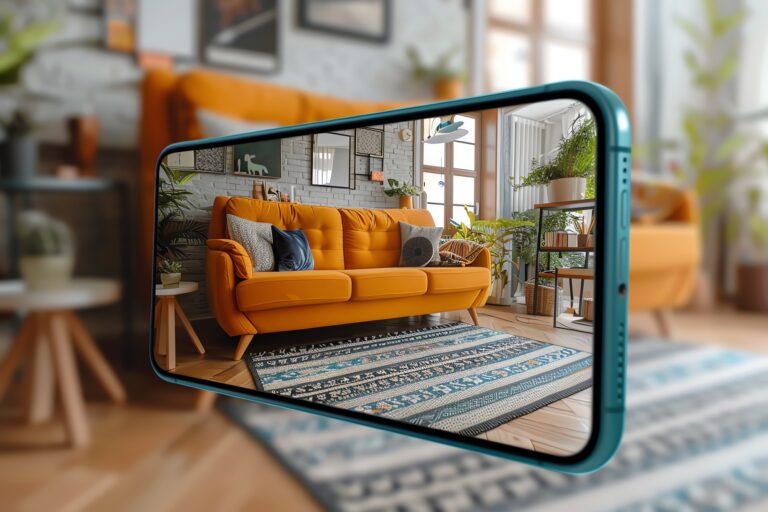
If you’ve spent any time designing in SketchUp, chances are you have a bit of a love-hate relationship with it.
On one hand, it’s familiar, relatively easy to pick up, and has been a go-to tool in the design world for years. It’s often one of the first platforms designers learn, and for simple 3D modeling, it absolutely gets the job done.
But at a certain point, many interior designers start to feel like they’ve outgrown it.
Maybe your files are getting heavier and slower as your projects become more detailed. Maybe you’re stacking plugin on top of plugin just to unlock functionality that feels like it should already be built in. Or maybe you’re realizing that creating a beautiful design is only one part of your workflow, and the rest of your business is happening across a handful of disconnected tools.
Because here’s the reality: interior design today is about much more than modeling a space. You’re managing clients, sourcing products, building presentations, tracking budgets, and keeping projects moving forward.
And that’s exactly where SketchUp can start to fall short.
In this guide, we’re breaking down tools that solve the real challenges interior designers face day-to-day. Whether you’re looking for better rendering, smoother collaboration, or a more streamlined way to run your projects, these SketchUp alternatives offer a more modern, efficient approach.
Table of Contents
Why seek an alternative to SketchUp?
SketchUp isn’t a bad tool. In fact, it still serves a purpose for many designers. But as your business grows and your workflow becomes more complex, it often stops being the most efficient or practical option.
Here are some of the most common reasons interior designers start looking for something better:
You’re relying on too many plugins to make it work
One of the biggest frustrations with SketchUp is how dependent it can be on plugins.
Need more advanced rendering capabilities? You’ll likely need a plugin.
Want smoother workflows or additional functionality? That’s another plugin.
Trying to bridge gaps between tools? You guessed it—another plugin.
While plugins can be helpful, they also introduce complexity. You’re managing updates, compatibility issues, and multiple tools that weren’t originally designed to work seamlessly together. Over time, what started as a simple setup can turn into a patchwork system that slows you down instead of supporting you.
It’s built for modeling, not for running your business
SketchUp does one thing well: 3D modeling. But interior designers need far more than that.
Your day-to-day workflow likely includes:
- Creating client-ready presentations
- Sourcing and organizing products
- Communicating with clients and gathering feedback
- Sending invoices and tracking payments
When your core tool only handles one piece of that process, you’re forced to rely on multiple additional platforms to fill in the gaps. This constant switching between tools not only takes time, but also increases the chances of miscommunication, missed details, and disorganized projects.
Collaboration can feel disconnected and inefficient
As projects become more collaborative, the limitations of file-based workflows become more noticeable.
Sending files back and forth, managing different versions, and waiting for updates can quickly become frustrating for both you and your clients. It also makes it harder to keep everyone aligned, especially when feedback is scattered across emails, messages, and marked-up documents.
Modern design workflows are shifting toward cloud-based tools that allow for real-time collaboration, centralized communication, and easier access from anywhere. Compared to that, SketchUp can start to feel a bit behind.
It doesn’t always scale with your business
What works for a single room or a small project doesn’t always hold up as your workload increases.
As you take on more clients and more complex projects, you may start to notice:
- Slower performance with larger files
- More time spent managing assets and updates
- A lack of structure across projects
At a certain point, the tool that once felt simple and efficient can begin to feel limiting, especially when you’re trying to grow or streamline your business.
Interior designers need more than just a modeling tool
This is ultimately the biggest shift happening in the industry.
Interior designers manage entire client experiences from start to finish. That includes everything from initial concepts to final installations.
You’re not just designing. You’re:
- Presenting ideas in a clear, professional way
- Sourcing and organizing products
- Managing client expectations and communication
- Keeping timelines, budgets, and deliverables on track
That’s why many designers are moving toward tools that support their full workflow, not just one piece of it. Instead of juggling multiple platforms, they’re choosing solutions that bring design, project management, and client interaction together in one place.
So what should you look for instead?
The best SketchUp alternative isn’t just about finding a tool with better modeling features. It’s about finding a platform that fits the way you actually work.
For some designers, that means more advanced rendering or technical capabilities. For others, it means simplifying their workflow, improving client collaboration, or reducing the number of tools they rely on day-to-day.
The key is choosing a solution that not only helps you design beautifully, but also helps you run your projects (and your business) more efficiently.
9 SketchUp alternatives to try
Check out these great alternatives to SketchUp. We’ve separated them by category to make it even easier for you to select the right one for you.
| Tool | Best for | Key features | Ratings | Price |
| DesignFiles | Interior designers who want an all-in-one solution | Project management, moodboards & rendering, client portal, invoicing & sourcing | ⭐ 4.6 (535 reviews) | $49–$69/month |
| MyDoma Studio | Designers managing projects + rendering in one tool | Product clipper, 3D rendering, client portal, invoices & POs, time tracking | ⭐ 4.2 (80 reviews) | $64/user/month |
| AutoCAD | Technical drafting and detailed architectural drawings | Advanced 2D/3D drafting, precise documentation, Autodesk integrations | ⭐ 4.6 (3,190 reviews) | $250/month or $2,030/year |
| Onshape | Advanced CAD users needing cloud collaboration | Real-time collaboration, version control, 3D modeling, data management | ⭐ 4.5 (312 reviews) | Free + paid plans ($1,500–$2,500/year) |
| Foyr | Easy-to-use 3D rendering without CAD experience | Drag-and-drop modeling, 50K+ models, real-time collaboration | ⭐ 4.0 (23 reviews) | $39–$159/month |
| Coohom | Fast 3D floor planning and rendering with large model library | 3D floor planner, AI tools, construction drawings, model library | ⭐ 4.8 (78 reviews) | Free + $36–$69/month |
| Blender | Advanced rendering and animation (free option) | Open-source modeling, animation, rendering engine, plugins | ⭐ 4.7 (945 reviews) | Free |
| HomeByMe | Beginners creating simple home designs | Drag-and-drop modeling, product catalog, realistic renders | ⭐ 3.8 (14 reviews) | Free + $29–$65/month |
| Homestyler | Simple floor planning and quick visualizations | 3D floor planner, large model library, rendering tools | ⭐ 4.8 (5 reviews) | Free + $4.90–$19.60/month |
Advanced CAD & BIM tools
For designers who need technical precision or work closely with architects and construction teams, these tools offer more advanced drafting and modeling capabilities. They’re powerful and detailed, but often come with a steeper learning curve and less focus on the day-to-day needs of interior designers.
1. AutoCAD
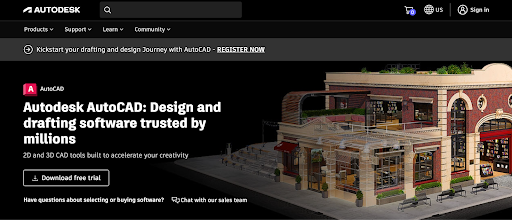
AutoCAD is a leading CAD software known for its precise 2D and 3D drafting tools, widely used in architecture and interior design. It offers a comprehensive set of features for detailed design and documentation, but does not include any project management functionality.
Features:
- Advanced 2D and 3D drafting and design tools
- Precise and detailed architectural drawings
- Extensive library of materials and textures
- Collaboration tools for team projects
- Integration with other Autodesk products
Pricing:
A monthly AutoCAD subscription costs $250, while an annual subscription costs $2,030.
Reviews:
AutoCad has received 4.6 stars out of 3,190 reviews on Capterra. One user says, “AutoCAD is an essential tool for mechanical engineers like me, because it offers a robust set of design and drafting capabilities.”
2. Onshape
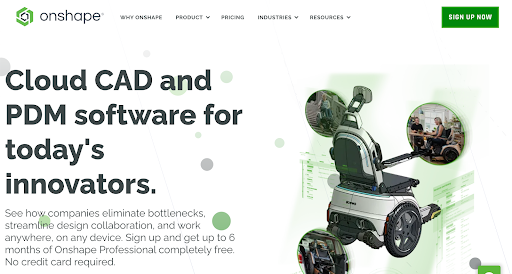
Onshape is a cloud-based CAD platform that supports real-time collaboration and comprehensive data management. It works well for designers who need advanced modeling tools and seamless team collaboration, but it has a steep learning curve.
Features:
- Cloud-based CAD platform
- Real-time collaboration and version control
- Advanced 3D modeling tools
- Integrated data management
- Access from any device with an internet connection
Pricing:
Onshape offers a free plan with limited features and a standard plan for $1,500 per year, which includes all the features of the free plan, plus unlimited private storage and direct, in-product support. The Professional plan includes even more features and costs $2,500 per year.
Reviews:
Onshape has received 4.5 stars out of 312 reviews on Capterra. One user says, “Have been daily user for 7years, more than happy with the dirrection and performance of this CAD solution, newer stops improving.”
All-in-one interior design tools
If you’re tired of juggling multiple platforms just to run one project, this category is where things start to feel a whole lot easier. These all-in-one tools go beyond 3D modeling to help you manage everything from client communication to sourcing, presentations, and billing—all in one place.
3. DesignFiles
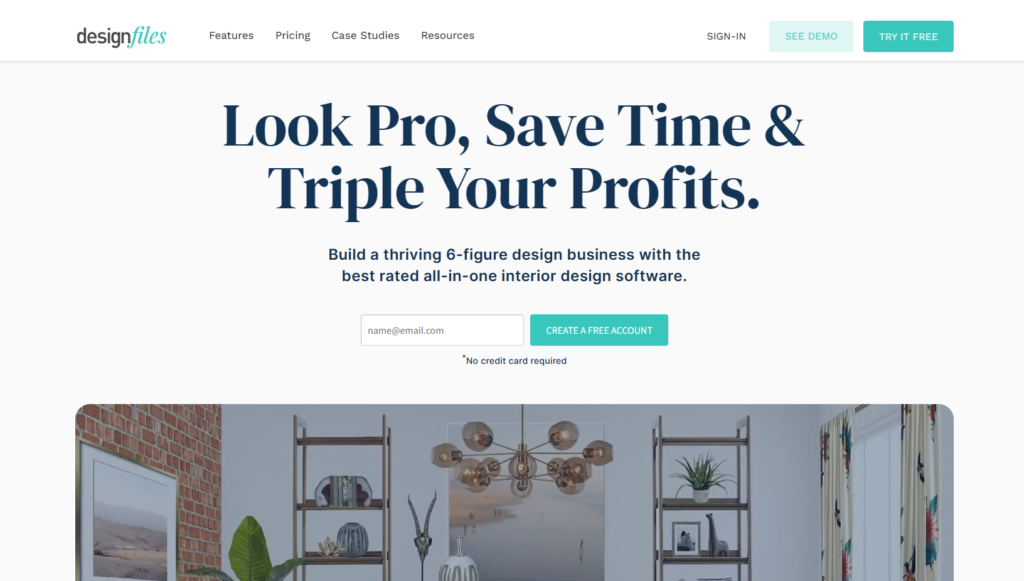
If SketchUp feels limiting, it’s often because it was never designed to handle everything else that comes with running a design project. That’s where DesignFiles stands out.
Instead of focusing only on 3D modeling, DesignFiles is built specifically for interior designers who need a complete workflow—not just a design tool.
With DesignFiles, you’re not just creating visuals. You’re managing your entire project from concept to completion in one place.
Features:
- All-in-one project management and design platform
- Moodboards, renderings, and presentations
- Integrated sourcing, invoicing, and procurement
- Client portal for feedback, approvals, and payments
- Cloud-based access from anywhere
Pricing:
DesignFiles offers 2 plans, including the eDesign Plan, which is $49 per month, the Full Service Plan, which is $69 per month.
Reviews:
DesignFiles has received 4.6 stars out of 535 reviews on Capterra. One user says, “Overall, I can say that I am managing about one third more projects than before in the same time. Which is incredible! The longer I use the software, the more I feel I’m getting quicker. I may get to the point where I doubled my productivity!”
4. MyDoma Studio
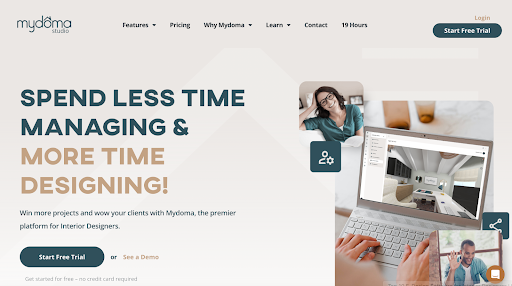
MyDoma is a software platform that interior designers can use to both manage design projects and create designs via 3D rendering capabilities.
Features:
- Product clipper
- 3D Rendering
- Embeddable design packages
- Purchase orders and invoices
- Client communication portal
- Contractor management
- Mood board tool
- Time tracker for projects
Pricing:
MyDoma’s offers one core plan for $64 per user per month, with a 10% savings for annual billing. You can purchase the Mydoma Jumpstart Onboarding package for $149 to get access to 4 guided group sessions, weekly office hours, and personalized 1:1 support.
Reviews:
MyDoma has received 4.2 stars out of 80 reviews on Capterra. One user says, “My business needed structure in all the processes. Mydoma gives my team the ability to stay on task and understand all the moving parts of each clients project and where we stand with sourcing, client approvals, and all the documentation that is involved.”
3D modeling & rendering tools
If your main goal is creating beautiful visuals and realistic renderings, these tools are built to bring your designs to life. They focus heavily on modeling and visualization, making them a strong step up from SketchUp in terms of output quality.
5. Foyr
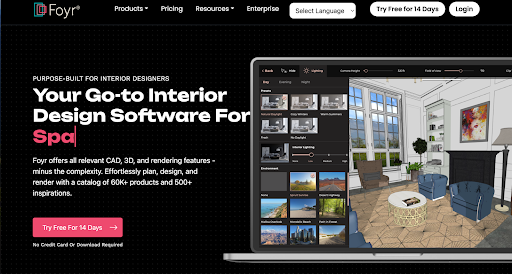
Foyr allows interior designers to create 3D models and renderings. It includes 50,000 models and doesn’t require any previous CAD or modeling training, however, it doesn’t include any project management tools.
Features:
- 3D modeling and rendering
- Extensive library of furniture and decor items
- Easy drag-and-drop interface
- Real-time collaboration and sharing
- Cloud-based access
Pricing:
The Basic Plan is priced at $39 per month and includes 30 renders per month. With the Standard plan, you’ll receive 90 renders per month for $89 per month. Meanwhile, the premium plan offers 210 render credits for $159 per month. Yearly discounts are also available.
Reviews:
Foyr has received 4.0 stars out of 23 reviews on Capterra. One user says, “Foyr has been a great tool for us in our ever growing interior design business. We offer rendering services to our clients, and are able to use Foyr to show the clients and the builders the dream vision before any construction has begun.”
6. Coohom
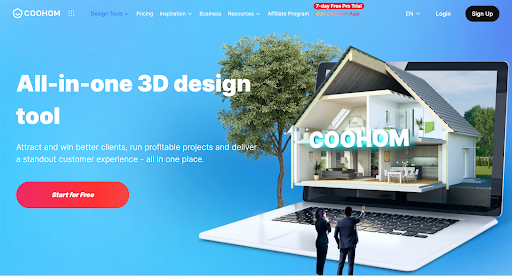
With Coohoom, interior designers can create floor plans and 3D renderings software, as well as access a model library with hundreds of items in unique categories, including styles like Neoclassic, Asian, Art Deco, and more. It doesn’t include any project management features.
Features:
- Custom modeling
- Construction drawings
- 3D floor planner
- 3D modeling
- AI home design software
Pricing:
The Free plan offers some basic drawing and importing features. The Pro plan costs $36 per user per month and unlocks unlimited design projects and a custom modeling tool. The Pro+ plan is $69 per user per month and offers additional video walkthrough and modeling features.
Reviews
Coohom has received 4.8 stars out of 78 reviews on Capterra. One user says, “My overall experience with Coohom has been positive. The platform’s intuitive interface, extensive library, and high-quality 3D visualization tools make it a powerful design tool. However, the pricing for advanced features and occasional software bugs can be drawbacks.”
7. Blender
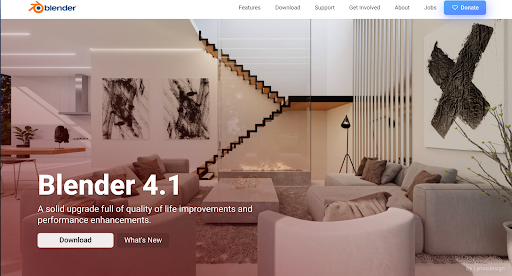
Blender is a free open-source software program offering 3D modeling, rendering, and animation capabilities. It offers a versatile toolset and a large and active community. While Blender is a powerful tool for 3D modeling and animation, its steep learning curve and complexity may be overwhelming for interior designers focused primarily on practical design tasks.
Features:
- Open-source 3D modeling, rendering, and animation
- Toolset for modeling, sculpting, and texturing
- Advanced rendering engine with real-time preview
- Animation and rigging capabilities
- Wide range of add-ons and plugins
Pricing
Blender is a free software platform.
Reviews
Blender has received 4.7 stars out of 945 reviews on Capterra. One user says, “Having an architecture background, I enjoyed Blender when doing parametric modelling and curvilinear architecture. And it is extremely diverse with great graphics and rendering output. I was really fascinated by its ability to play with windows (duplicate, replace or even create) especially when working on large projects.”
Beginner-friendly tools
These tools are great if you’re just getting started or working on simpler projects that don’t require a full professional workflow. While they’re easy to use and accessible, they may feel limiting as your projects—or your business—become more complex.
8. HomeByMe
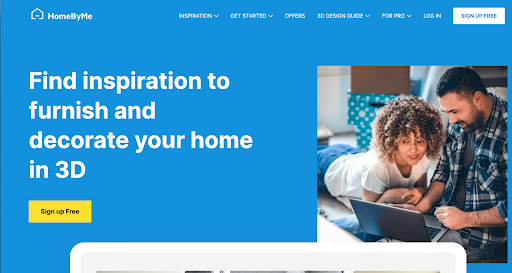
HomeByMe is an online 3D home design tool that allows users to create detailed interior designs easily. It offers realistic renderings and a large catalog of furnishings, making it ideal for visualizing home projects. HomeByMe does not offer any project management features.
Features:
- User-friendly 3D modeling and rendering
- Extensive catalog of furniture and home decor items
- Realistic rendering and virtual tour capabilities
- Easy drag-and-drop interface
- Cloud-based for easy access
Pricing:
The Free Plan includes basic features for up to 2 projects. The Essentials plan costs $29 per month and unlocks unlimited projects, 50 full HD images, and 5 4K images. The Pro plan costs $65 per month and gives you unlimited projects, HD images, and 4K images.
HomeByMe has received 3.8 stars out of 14 reviews on Capterra. One user says, “I adore the fact that HomeByMe works in browser and is accessible to me from any computer. It has a perfect combination of simplicity of use, and feature power. I’ve used it on multiple renovation projects, and with only a couple of hours of planning, we were ready to move into the next phase of the renovation.”
9. Homestyler
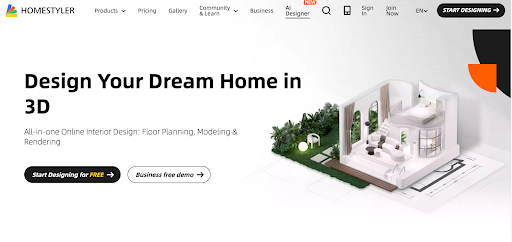
Homestyler is an app that mostly caters toward the homeowner audience, though interior designers can also use it. It lets you create 3D floor plans and visualize different design options, offering a realistic visualization of how furniture and other objects will ultimately appear in a given space.
Features:
- Cloud based 3D floor planner
- 3D rendering
- 100,000+ 3D models and materials
Pricing:
Homestyler offers a Free plan for accessing their 3D floor planner and 1K rendering. The Pro plan (starting at $4.90 per month), lets you remove the Homestyler watermark from your designs and get additional renders. The Master plan costs $9.90 per month for unlimited 4K rendering. With the Team plan ($19.60 per user per month), you get a shared Design Space and model and texture library.
Reviews
Homestyler has received 4.8 stars out of 5 reviews on Capterra. One user says, “I’m loving it I’ve always wanted to design but didn’t get a chance to using Homestyler has Changed that helping me actualize my imaginations as well as the different rooms available to improve.”
How to choose the right SketchUp alternative
By now, you’ve probably realized something important: there isn’t one “best” SketchUp alternative—there’s just the one that fits how you actually work.
Some tools focus on technical precision. Others prioritize beautiful renderings. And some are designed to support your entire workflow from start to finish.
The key is getting clear on what you need most right now. Are you trying to create better visuals? Simplify your process? Spend less time managing projects and more time designing?
Once you know that, the right choice becomes a lot easier.
Start by identifying your biggest bottleneck
If SketchUp is slowing you down, it’s usually for one of these reasons:
- You’re juggling too many tools
- You need more advanced modeling or drafting
- Your renderings aren’t as polished as you’d like
- Your workflow feels disorganized as projects grow
Each of these points to a different type of solution.
Here’s a quick way to decide
If you want a shortcut, use this as your guide:
- If you want to replace multiple tools and run your entire workflow in one place → Go with DesignFiles. This platform is the best for interior designers who want to streamline projects, client communication, and business tasks all in one platform.
- If you need technical drafting or work closely with architects → Go with AutoCAD or Onshape. These are best for precision, construction drawings, and advanced modeling.
- If your main focus is high-quality 3D rendering and visualization → Go with Foyr, Coohom, or Blender. These options are ideal for creating realistic visuals and design presentations.
- If you want a free or budget-friendly option → Go with Blender or Homestyler. Either option is great for keeping costs low while still exploring 3D design tools.
- If you’re just getting started or working on simpler projects → Go with HomeByMe or Homestyler. Both platforms offer ease of use and quick learning curves.
A final note
Choosing a new design tool comes down to how much time it frees up and how seamlessly it fits into your day-to-day workflow.
The best option is the one that:
- fits your workflow
- reduces friction in your process
- and helps you deliver a better experience to your clients
Because at the end of the day, the goal is to run your projects smoothly and grow your business with less stress.
Why DesignFiles is the perfect Sketchup alternative for interior designers
When comparing SketchUp with DesignFiles, the biggest difference comes down to consolidation.
With SketchUp, your workflow often looks like this:
- One tool for modeling
- Another for moodboards or presentations
- Another for sourcing
- Another for invoices and payments
DesignFiles replaces that patchwork setup with a single platform where everything connects.
You can:
- Build moodboards and renderings
- Source and organize products
- Create client-ready presentations
- Send invoices and track payments
- Communicate with clients and collect feedback
And best of all, you can do all of this without switching tools.
A smoother client experience (that actually saves you time)
One of the biggest pain points with SketchUp isn’t just creating designs—it’s everything that happens after.
DesignFiles solves that by giving your clients a dedicated space to:
- Review designs
- Comment directly on products
- Approve or decline selections
- View invoices and make payments
This means fewer emails, fewer follow-ups, and far less confusion. Everything stays organized and tied to the project, so you’re not digging through messages or chasing approvals.
Built for how interior designers actually work
Unlike CAD-heavy tools, DesignFiles is designed with real interior design workflows in mind.
You can:
- Create polished, branded presentations in minutes
- Automatically generate product lists and spec details
- Turn approved designs into invoices or purchase orders
- Keep every project detail in one centralized workspace
This leads to less admin time, fewer errors, and more time spent on the creative side of your business.
If you’re simply looking for another 3D modeling tool, there are plenty of options on this list.
But if you’re ready to simplify your workflow, elevate your client experience, and run your projects more efficiently, DesignFiles offers something SketchUp can’t: a true all-in-one system designed for interior designers.
Frequently asked questions
Yes! If you’re on the hunt for a free SketchUp alternative, there are a few solid options—though each comes with its own limitations. Blender is incredibly powerful (and totally free), but it has a steep learning curve and is better suited for animation and complex rendering. FreeCAD is more technical, great for precise modeling in engineering or architecture, but less intuitive for interior design. If you’re just getting started, Tinkercad is super beginner-friendly and browser-based, though it’s pretty limited in features. So while these tools can be helpful depending on your needs, they may not offer the speed, simplicity, or client-ready visuals that interior designers typically look for.
If you’re looking for platforms that feel similar to SketchUp, a few standout options come to mind. Homestyler offers a simple, drag-and-drop interface with built-in furniture and decor. Coohom is another favorite, especially for interior designers, thanks to its high-quality renders and extensive product library. For those who need more technical control, AutoCAD delivers powerful drafting tools, though it comes with a steeper learning curve. Each of these tools offers a SketchUp-style experience, with varying levels of complexity depending on your workflow.
If you’re searching for a SketchUp alternative that truly fits the needs of interior designers, a few platforms stand out. Unlike general 3D tools, DesignFiles is built specifically for interior design, offering everything from moodboards and floor plans to sourcing, billing, and client feedback tools all in one place. Coohom is another strong option with beautiful rendering capabilities, a huge furniture library, and an easy-to-use interface perfect for fast-paced design workflows. Homestyler also shines with drag-and-drop simplicity and detailed virtual tours, making it great for visual storytelling.
Each of these alternatives offers unique features that can enhance your interior design projects, so the best choice will depend on your specific requirements and design style.
Want a SketchUp alternative that is easy to use and helps streamline interior design projects? Check out DesignFiles.