Have you ever sent a client a product list and watched her buy every piece herself?
You spent a full day sourcing that room. You earned nothing on any of it.
That’s when affiliate programs start to look interesting.
In six years of running workshops for designers, nobody’s ever asked me how to find affiliate programs. They ask whether it’s worth the hours, and until now I haven’t had good numbers to give them.
Now I do. They’re more useful than the figures floating around online, and they’re smaller.
So this guide runs in a different order. First, what designers earn and what it costs them in hours. Then the platform decision, which is where most setups stall. Then 28 interior design affiliate programs worth your time.
Last, how to run affiliate links through paid client work without damaging the relationship.
Table of Contents
Affiliate income is smaller than you’ve heard
What are you actually signing up for?
The earnings claims you’ll find on this topic are unsourced. That includes the ones that used to sit on this page.
The numbers below come from a survey of working interior designers. They’ll either make the case for you or save you a weekend.
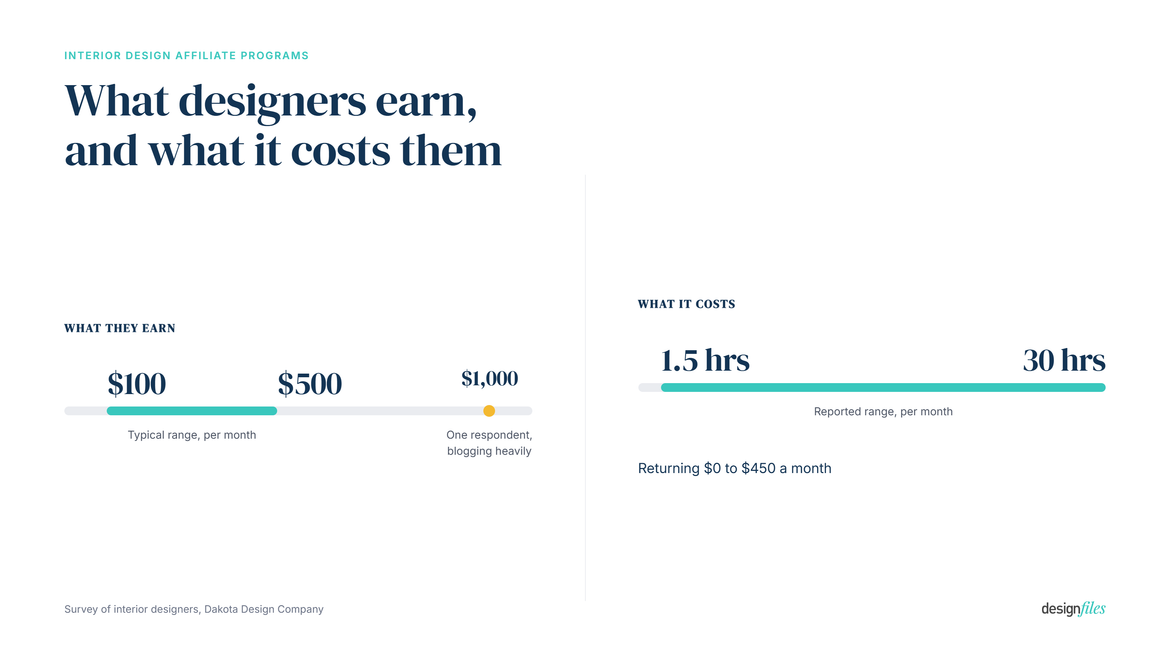
$100 to $500 a month, with one outlier
Surveyed designers reported monthly affiliate revenue spread fairly evenly across a $100 to $500 range (Dakota Design Company designer survey).
One respondent hit $1,000 a month. She also said it took very active blogging, and the number fell away once she eased off.
So the top figure came with a condition. It didn’t survive the condition going away.
Designers earning far more do exist. You’ve seen their reels.
They’re influencers first and designers second. That’s a different job, with different hours and a different client. Know which one you are before you compare.
The hours behind those numbers
Designers in the same survey spent between 1.5 and 30 hours a month on affiliate content. The return ranged from $0 to $450 a month (Dakota Design Company designer survey).
Put those two ranges side by side and check them against your hourly rate.
Some of those designers are doing well. Some are working a second job for free.
One habit separates them. The efficient ones save products to their affiliate platform while they’re already sourcing, about fifteen to twenty minutes a day. The links exist before the post does.
Is it worth your time?
Yes, if three things are already true. You publish consistently. Traffic arrives somewhere you control. And you’re watching clients buy the retail products you sourced.
No, if you’d be building an audience from scratch just to earn commission. That’s a marketing job with a long payback, and you’ve got billable work waiting.
The survey split roughly three ways on whether any of this was worth it. There’s no consensus to hide behind, so it’s your call.
One designer I worked with had three years of Pinterest room reveals behind her. She set up affiliate links in an afternoon, because the traffic was already there. Another spent four months growing an Instagram following just to monetize it. She made under $200 and went back to raising her design fee.
Same tactic, opposite outcomes. The difference was whether the audience existed first.
Pick your platform before you pick your programs
Which comes first, the retailer or the system that holds your links?
The system. An approval from Lumens doesn’t do much until you’ve decided where your links live and how you’ll share them. Skip this and you’ll be juggling logins within a month.
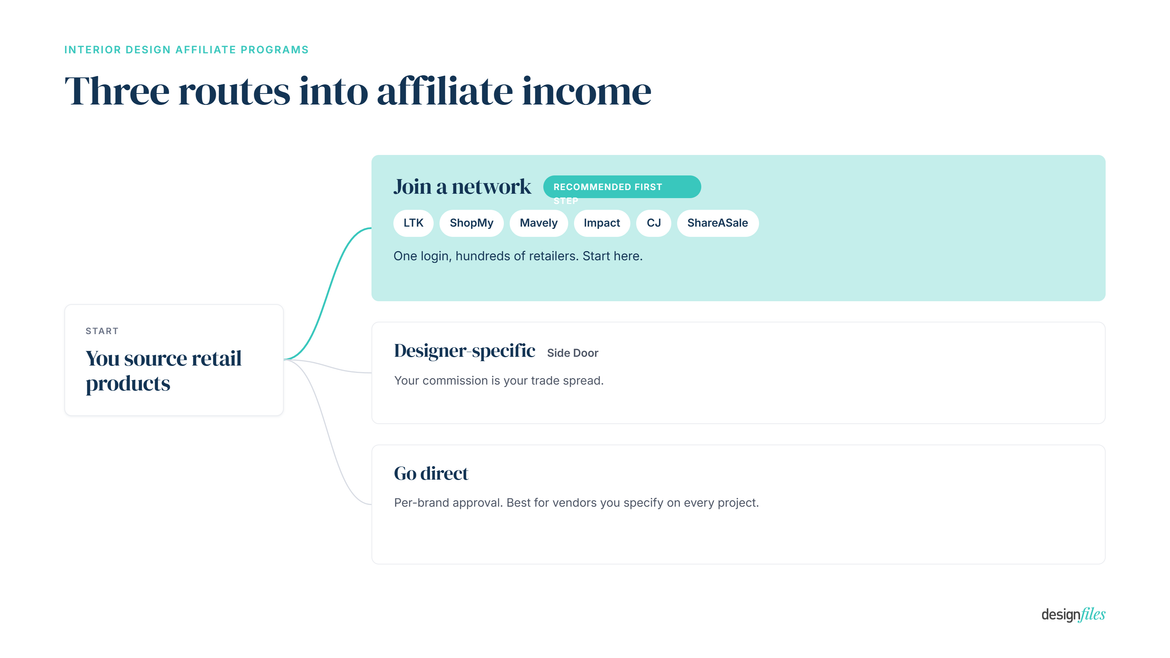
There are three routes. Start with one.
| Route | How it works | Best for | What it costs you |
|---|---|---|---|
| Join a network | One login aggregates hundreds of retailers | Almost every designer starting out | An application, and sometimes a wait |
| Designer-specific | Commission is your trade spread on a shoppable collection | Full-service and e-design practices | Application, tax ID, business setup |
| Go direct | Apply to each retailer individually | Vendors you specify on every project | Per-brand approval and admin |
Choose based on three things: where your audience already is, whether your clients buy retail or trade, and how much admin you’ll tolerate.
Affiliate networks that handle the links for you
Most of the 28 programs below run on one of three networks: Impact, CJ Affiliate, or ShareASale and Awin. Join the network and you’ve often cleared the real prerequisite.
LTK is the most widely used among designers, and it’s the one they name most often for return on effort. Amazon’s influencer storefront comes second.
ShopMy and Mavely both pull commissionable products from lots of retailers into one place. We cover both in our guide to building a virtual design business.
One catch with LTK: it wants to see you already sharing links before it approves you. Apply once you’ve got a few posts up.
Every designer I’ve seen give up on affiliate income quit at the same point. She’d applied to eleven retailer programs, been approved by four, and ended up with eleven logins and no system.
Pick the network first.
Side Door and the designer-specific model
How is Side Door different? Your commission isn’t a percentage a retailer pays you.
It’s the spread between your client’s purchase price and your trade net price, less freight. You earn it on a curated collection that becomes shoppable through your own site.
That makes it closer to markup than to classic affiliate marketing. It matters for the trade decision further down.
You’ll need an application and a tax ID, so get your paperwork in order first. It suits full-service and e-design practices best, because it assumes you’ve got trade accounts and clients buying through you.
Going direct with individual retailer programs
Direct programs are step three.
They pay off when you specify the same handful of vendors on nearly every project. Commission on repeat specification adds up, and an established relationship can sometimes be negotiated into better terms.
As a starting point, they’re a mistake. Approval happens brand by brand, and the admin multiplies fast. Pick two or three vendors you genuinely use and apply to those.
Which affiliate program fits the way you work?
Start with average order value.
A 3% commission on a $4,000 sofa you were specifying anyway beats 20% on a $40 vase you had to invent a reason to recommend. The best affiliate programs for interior designers are the ones that fit how you already source.
Commission rate still matters. Read it against the basket.
Cookie duration matters for the same reason. Furniture has a long decision cycle, so a 30 to 90 day window converts where a 24 hour window won’t. A modest rate with a long cookie often beats the reverse.
Brand alignment protects you. Recommend a brand your clients would never live with and you’ll earn a small commission, then lose the authority that made the recommendation worth anything.
Trade pricing and designer perks sit slightly apart. When a program pairs commission with a trade account, you get to choose per product. More on that below.
The top 28 interior design affiliate programs, with terms checked in September 2026
These aren’t ranked. They’re grouped by what you’re sourcing, so treat the list as a reference.
Furniture affiliate programs make up most of it, because furniture is where the order values sit.
- Broad platforms and marketplaces: 1 to 3
- Furniture and home décor across price points: 4 to 8, 11, 12, 14, 16, 17, 19 to 25, and 27
- Rugs: 9 and 15
- Lighting: 10 and 18
- Kitchen, bath, and renovation supply: 13
- Art: 26 and 28
Affiliate terms change without announcement. The aggregator sites that republish them go stale quietly.
Every rate and cookie window below was checked in September 2026. Before you apply, confirm current terms on the program’s own affiliate page. That goes for this list too.
1. LTK Creator
LTK (formerly LIKEtoKNOW.it) is one of the most popular affiliate platforms for visually driven creators, making it a natural fit for interior designers who regularly share styled spaces, moodboards, and product recommendations online. Designers can link furniture, décor, lighting, and accessories directly within Instagram posts, curated collections, or lifestyle content.
Because LTK connects designers with thousands of retail brands, it allows you to monetize inspiration posts, room reveals, and everyday design content. It’s especially powerful for designers building an audience on Instagram or Pinterest who want to turn product recommendations into ongoing affiliate income.
- Commission rate: 10–25%
- Cookie duration: 7–30 days
- Product category: Furniture, home décor, lighting, and lifestyle products
- Best for: Stylish furniture finds, décor accents, and curated “shop the look” recommendations shared through social media
- Affiliate network: LTK Creator platform
2. Wayfair Professional
Wayfair Professional is a designer-focused program that gives interior designers access to Wayfair’s massive catalog of furniture, lighting, décor, and home essentials. Because the retailer carries products across nearly every design style and price point, it’s an easy affiliate program to integrate into both client projects and online content.
Designers can recommend pieces for full room designs, budget-friendly upgrades, or quick styling updates while earning commissions on purchases. The wide selection and strong brand recognition also help increase conversion rates, especially when clients or readers want accessible furniture and décor options that ship quickly.
- Commission rate: 5–7%
- Cookie duration: 7 days
- Product category: Furniture, lighting, décor, and home furnishings
- Best for: Versatile furniture pieces, budget-friendly décor, and practical home essentials for a wide range of client budgets
- Affiliate network: Impact (Wayfair Affiliate Program)
3. Amazon Associates
Amazon Associates is one of the most widely used affiliate programs, giving interior designers access to millions of products across furniture, décor, lighting, storage, and everyday home essentials. Because many clients already shop on Amazon, recommendations often convert quickly, especially for smaller décor pieces or budget-friendly design solutions.
Designers often use Amazon affiliate links to fill in the gaps within a room design, sourcing items like accent décor, organization products, lamps, or styling accessories. Its huge inventory and familiar shopping experience make it a practical affiliate option for blog content, Pinterest traffic, and curated product lists.
- Commission rate: Varies by category (typically 1–3% for home and décor)
- Cookie duration: 24 hours
- Product category: Furniture, home décor, lighting, organization, and household products
- Best for: Affordable décor accents, practical home accessories, and quick-shipping styling pieces for everyday interiors
- Affiliate network: Amazon Associates
4. One Kings Lane
One Kings Lane is known for its curated collection of stylish furniture, statement décor, and distinctive home accents. The brand blends classic and contemporary design, making it a favorite source for designers looking to recommend pieces that feel elevated yet approachable.
For interior designers using affiliate marketing, One Kings Lane offers the opportunity to earn commissions on higher-priced items such as furniture, lighting, and decorative accessories. Its recognizable brand and polished product styling make it particularly effective for blog content, curated product roundups, and “shop the room” style recommendations.
- Commission rate: Up to 12%
- Cookie duration: 30 days
- Product category: Furniture, lighting, rugs, and home décor
- Best for: Sophisticated furniture pieces, statement lighting, and distinctive décor that adds character to traditional or eclectic interiors
- Affiliate network: CJ Affiliate
5. Williams-Sonoma
Williams-Sonoma is a well-known premium retailer offering high-quality kitchenware, furniture, lighting, and home décor. For interior designers, the brand is particularly valuable when sourcing stylish kitchen accessories, tabletop pieces, and refined home furnishings that elevate everyday living spaces.
Because Williams-Sonoma carries higher-ticket items and has strong brand recognition, affiliate links can perform well when included in curated product lists, blog roundups, or design recommendations. Designers can confidently recommend the brand’s timeless pieces while earning commissions on purchases made through their referral links.
- Commission rate: 3%
- Cookie duration: 7 days
- Product category: Kitchenware, furniture, lighting, and home décor
- Best for: Elevated kitchen accessories, classic tabletop pieces, and refined furnishings that complement polished residential interiors
- Affiliate network: CJ Affiliate
6. Etsy
Etsy is a go-to marketplace for unique, handmade, and vintage home décor—making it a favorite among interior designers who want to source pieces that feel personal and one-of-a-kind. From custom artwork and handcrafted lighting to vintage rugs and artisan ceramics, Etsy offers endless opportunities to recommend distinctive products.
For designers using affiliate marketing, Etsy works especially well in curated product lists, blog roundups, and moodboards featuring character-rich décor. It’s also a great way to support independent makers while earning commissions on pieces that add individuality and charm to a space.
- Commission rate: 4%
- Cookie duration: 30 days
- Product category: Handmade décor, vintage furniture, artwork, and artisan home accessories
- Best for: Unique handcrafted décor, custom artwork, vintage rugs, and small-batch decorative accents
- Affiliate network: Awin
7. Design Within Reach (DWR)
Design Within Reach (DWR) is a premium retailer known for its curated selection of authentic modern furniture and iconic design pieces. The brand features work from legendary designers like Eames, Saarinen, and Nelson, making it a trusted source for high-end modern interiors.
For interior designers participating in affiliate marketing, DWR offers the opportunity to recommend statement furniture, sculptural lighting, and timeless décor pieces that elevate a space. Because many items have higher price points, even modest commission rates can generate meaningful earnings when clients or readers purchase through affiliate links.
- Commission rate: 5%
- Cookie duration: Not specified
- Product category: Modern furniture, lighting, and designer home décor
- Best for: Iconic modern furniture, architectural lighting, and investment-worthy statement pieces for contemporary interiors
- Affiliate network: CJ Affiliate
8. Burke Decor
Burke Decor is a stylish online retailer known for its curated selection of modern furniture, lighting, rugs, and decorative accessories. The brand carries both emerging designers and well-known home décor labels, giving interior designers access to a wide range of trend-forward pieces that work beautifully in curated interiors.
For designers using affiliate marketing, Burke Decor is appealing because of its higher price points and design-focused product assortment. This makes it ideal for recommending distinctive décor, statement lighting, and elevated furnishings in blog posts, moodboards, and curated product lists.
- Commission rate: Up to 8%
- Cookie duration: 30 days
- Product category: Furniture, lighting, rugs, and home décor
- Best for: Trend-forward décor, designer lighting, stylish rugs, and elevated accent pieces that add personality to modern interiors
- Affiliate network: ShareASale / Awin
9. Rug Source
Rug Source specializes in handmade, vintage, and traditional rugs sourced from weaving regions around the world. For interior designers, it’s a valuable affiliate partner when sourcing statement rugs that anchor a room and add texture, history, and craftsmanship to a space.
Because rugs often represent a significant purchase in a design project, Rug Source offers strong earning potential through affiliate links. Designers can recommend distinctive rugs in blog roundups, curated product lists, or room moodboards while helping clients discover high-quality pieces with timeless appeal.
- Commission rate: 10%
- Cookie duration: 180 days
- Product category: Handmade rugs, vintage rugs, and area rugs
- Best for: Hand-knotted Persian rugs, vintage statement rugs, and richly patterned pieces that bring warmth and character to residential interiors
- Affiliate network: ShareASale
10. 1-800 Lighting
1-800 Lighting is a well-known online retailer specializing in decorative lighting, ceiling fans, and home fixtures. For interior designers, it’s a helpful affiliate partner when sourcing statement lighting pieces that elevate a room’s overall design.
Because lighting often serves as both a functional and decorative focal point, recommending fixtures through affiliate links can generate strong commissions, especially on higher-value items like chandeliers or designer pendants. Designers frequently feature 1-800 Lighting products in moodboards, blog roundups, and curated room designs where lighting plays a central role.
- Commission rate: Up to 6%
- Cookie duration: 30 days
- Product category: Lighting fixtures, ceiling fans, and home lighting accessories
- Best for: Statement chandeliers, modern pendant lights, decorative wall sconces, and stylish fixtures that complete a room design
- Affiliate network: CJ Affiliate
11. Designer Living
Designer Living is a home retailer offering affordable furniture, bedding, and décor designed for everyday comfort and style. The brand focuses on accessible home products that make it easy to refresh a space without a large investment, which makes it appealing for designers working with budget-conscious clients.
For interior designers using affiliate marketing, Designer Living is a practical option for recommending stylish yet affordable pieces that help complete a room. The brand’s wide selection of bedding, accent furniture, and decorative accessories works well in curated product lists, blog content, and budget-friendly room design guides.
- Commission rate: Up to 12%
- Cookie duration: 30 days
- Product category: Furniture, bedding, and home décor
- Best for: Budget-friendly bedding, cozy textiles, and versatile accent pieces that help complete comfortable, everyday interiors
- Affiliate network: ShareASale
12. The Home Depot
The Home Depot is a household name for home improvement, furniture, and décor, making it a practical affiliate partner for interior designers working across a wide range of projects. From lighting and rugs to outdoor furniture and décor accents, the retailer offers an extensive catalog that supports both large renovations and simple styling updates.
For designers using affiliate marketing, The Home Depot is especially useful when recommending functional items alongside decorative pieces. Its strong brand recognition, competitive pricing, and nationwide availability make it easy for clients and readers to purchase recommended products with confidence.
- Commission rate: 8% on home décor, 1% on appliances and building supplies
- Cookie duration: 1–30 days (varies by product category)
- Product category: Furniture, lighting, home décor, outdoor furnishings, and home improvement products
- Best for: Practical home upgrades, affordable décor accents, outdoor furniture, and functional design elements for residential spaces
- Affiliate network: Impact
13. Build with Ferguson
Build with Ferguson is a premium retailer specializing in kitchen, bath, lighting, and appliance products often used in renovation and new construction projects. For interior designers, it’s a valuable affiliate partner when sourcing high-quality fixtures and finishes that elevate kitchens, bathrooms, and utility spaces.
Because many of the products, such as faucets, lighting, and appliances, have higher price points, Build with Ferguson offers strong earning potential through affiliate links. Designers often feature these products in renovation guides, kitchen and bath moodboards, and curated product lists where functional design meets elevated style.
- Commission rate: Up to 6% for professionals, up to 2% for influencers
- Cookie duration: Up to 15 days
- Product category: Kitchen fixtures, bathroom fixtures, lighting, and appliances
- Best for: Designer-quality faucets, statement lighting, premium kitchen appliances, and sophisticated bath fixtures for renovation projects
- Affiliate network: Impact
14. IKEA
IKEA is one of the most recognizable home retailers in the world, known for its affordable furniture, minimalist design, and practical storage solutions. For interior designers, it’s a useful affiliate option when recommending accessible pieces that help clients achieve a stylish look without a high price tag.
Because IKEA products appeal to a wide audience—from renters to first-time homeowners—affiliate links often perform well in budget-friendly room guides, small-space design content, and practical styling posts. Designers can recommend everything from modular storage systems to versatile furniture pieces that balance function, style, and value.
- Commission rate: Up to 5%
- Cookie duration: 7 days
- Product category: Furniture, storage solutions, and home décor
- Best for: Affordable modern furniture, smart storage solutions, and clean-lined Scandinavian-style décor for everyday interiors
- Affiliate network: Awin
15. Ruggable
Ruggable is known for its innovative machine-washable rug system, which combines stylish design with everyday practicality. The brand offers a wide range of patterns and styles, from classic Persian-inspired rugs to modern, minimalist designs.
For interior designers using affiliate marketing, Ruggable is an appealing partner because its products solve a common client challenge: maintaining beautiful rugs in high-traffic areas. The brand’s strong reputation and loyal customer base also help drive conversions when featured in blog content, design guides, or curated room designs.
- Commission rate: 3%
- Cookie duration: 21 days
- Product category: Washable rugs and home textiles
- Best for: Stylish machine-washable rugs, family-friendly area rugs, and durable patterned rugs ideal for high-traffic living spaces
- Affiliate network: Impact
16. Pier 1
Pier 1 is a long-standing home décor retailer known for its eclectic style, globally inspired accents, and approachable price points. For interior designers, it’s a helpful affiliate partner when sourcing decorative pieces that add personality, texture, and color to a space.
The brand’s wide variety of décor makes it easy to incorporate into curated product lists, styling guides, or room refresh content. Its accessible pricing also appeals to clients looking for distinctive pieces that elevate a space without stretching the budget.
- Commission rate: 4%
- Cookie duration: 90 days
- Product category: Furniture, home décor, and decorative accessories
- Best for: Globally inspired décor, textured accent pieces, and budget-friendly furniture that adds warmth and character to a room
- Affiliate network: FlexOffers
17. 2Modern
2Modern is a design-forward retailer known for its curated collection of contemporary furniture, lighting, and décor from top modern design brands. For interior designers working on sleek, modern interiors, the platform offers access to stylish pieces that combine strong aesthetics with high-quality craftsmanship.
Because many products sit in the premium price range, 2Modern can be a valuable affiliate partner when recommending statement furniture and architectural lighting. Designers often feature these pieces in modern moodboards, blog roundups, or curated product lists where clean lines and elevated design are key.
- Commission rate: 7%
- Cookie duration: 30 days
- Product category: Modern furniture, lighting, and contemporary home décor
- Best for: Sleek modern furniture, sculptural lighting fixtures, and design-forward pieces that elevate contemporary interiors
- Affiliate network: ShareASale / Awin
18. Lumens
Lumens is a leading retailer for modern lighting, fans, and contemporary home furnishings. The brand carries products from well-known design brands like Flos, Artemide, and Herman Miller, making it a trusted source for designers looking to recommend high-quality lighting and modern design pieces.
For interior designers using affiliate marketing, Lumens offers strong opportunities to earn commissions on statement lighting and premium fixtures. Designers often feature Lumens products in modern moodboards, renovation guides, and curated lighting roundups where design-forward fixtures play a central role.
- Commission rate: 3–12%
- Cookie duration: 30 days
- Product category: Modern lighting, ceiling fans, and contemporary home furnishings
- Best for: Architectural pendant lights, sculptural chandeliers, modern ceiling fans, and premium designer lighting for contemporary interiors
- Affiliate network: CJ Affiliate
19. World Market
World Market is known for its eclectic collection of globally inspired furniture, décor, and home accessories. The retailer blends international design influences with accessible pricing, making it a great source for distinctive pieces that add personality and warmth to a space.
For interior designers using affiliate marketing, World Market works well when recommending decorative accents, statement furniture, and layered styling pieces. Its wide variety of textures, colors, and cultural influences makes it easy to incorporate into curated product lists, blog content, and moodboards that celebrate collected, well-traveled interiors.
- Commission rate: 3.5%
- Cookie duration: 14 days
- Product category: Furniture, home décor, and decorative accessories
- Best for: Globally inspired décor, textured accent furniture, woven baskets, and eclectic styling pieces that add character to layered interiors
- Affiliate network: CJ Affiliate
20. Anthropologie
Anthropologie is known for its distinctive, bohemian-inspired home décor and furniture. The brand blends artistic design with high-quality craftsmanship, making it a favorite source for designers who want to add personality, texture, and statement pieces to a space.
For interior designers using affiliate marketing, Anthropologie works particularly well for curated décor recommendations and styling content. Its recognizable aesthetic and loyal customer base help drive conversions when featured in blog posts, moodboards, or “shop the room” style content.
- Commission rate: Up to ~5–6%
- Cookie duration: 1–7 days
- Product category: Furniture, home décor, textiles, and decorative accessories
- Best for: Bohemian-inspired furniture, sculptural décor, artistic lighting, and distinctive accent pieces that create personality-driven interiors
- Affiliate network: Rakuten Advertising / Mavely
21. Lulu and Georgia
Lulu and Georgia is a popular online retailer known for its trend-forward furniture, rugs, and décor. The brand frequently collaborates with well-known designers and tastemakers, offering collections that blend modern, classic, and California-inspired aesthetics.
For interior designers, Lulu and Georgia is a strong affiliate partner when sourcing stylish statement pieces that feel elevated yet approachable. Designers often feature the brand’s rugs, lighting, and furniture in moodboards, room makeovers, and curated product roundups.
- Commission rate: Up to ~8%
- Cookie duration: 30 days
- Product category: Furniture, rugs, lighting, and home décor
- Best for: Trend-forward rugs, sculptural lighting, and designer-inspired furniture that elevate modern residential interiors
- Affiliate network: CJ Affiliate
22. Article
Article is a direct-to-consumer furniture brand known for its modern design, high-quality materials, and streamlined online shopping experience. The brand focuses on contemporary pieces with clean lines, making it a popular source for modern and mid-century inspired interiors.
For designers using affiliate marketing, Article offers foundational furniture pieces such as sofas, dining tables, and storage furniture. The brand’s strong reputation for quality and transparent pricing helps build trust with clients and readers.
- Commission rate: ~5%
- Cookie duration: 30 days
- Product category: Modern furniture and home furnishings
- Best for: Mid-century inspired sofas, minimalist dining tables, modern storage pieces, and clean-lined furniture for contemporary interiors
- Affiliate network: Impact
23. CB2
CB2 is a modern home retailer known for its sleek furniture, bold lighting, and contemporary décor. As the modern-focused sister brand to Crate & Barrel, CB2 appeals to designers who want sophisticated pieces that feel architectural, minimal, and design-forward.
For interior designers, CB2 is a valuable affiliate partner when sourcing statement furniture and modern décor for urban homes, apartments, and contemporary spaces. Its recognizable brand and high-quality photography also make it ideal for blog content and curated design roundups.
- Commission rate: ~3–5%
- Cookie duration: 7 days
- Product category: Modern furniture, lighting, and contemporary décor
- Best for: Sculptural furniture, statement lighting, and modern accent pieces that elevate sleek, design-forward interiors
- Affiliate network: CJ Affiliate
24. Frontgate
Frontgate is a luxury home retailer specializing in high-end furniture, outdoor living products, and upscale home décor. The brand is especially well known for its outdoor collections, including patio furniture, poolside accessories, and entertaining essentials.
For interior designers using affiliate marketing, Frontgate offers opportunities to earn commissions on premium pieces that enhance both indoor and outdoor spaces. Its higher price points can translate into larger commissions when clients purchase through affiliate links.
- Commission rate: Up to ~5%
- Cookie duration: 30 days
- Product category: Luxury furniture, outdoor furniture, and home décor
- Best for: Elegant outdoor furniture, luxury patio sets, and refined décor pieces that elevate indoor-outdoor living spaces
- Affiliate network: CJ Affiliate
25. Parachute
Parachute is a premium home brand best known for its luxury bedding, bath linens, and soft home essentials. The brand focuses on high-quality natural materials and timeless design, making it a favorite among designers who prioritize comfort and elevated everyday living.
For interior designers, Parachute works well as an affiliate partner when recommending bedroom and bathroom products that combine simplicity, softness, and quality craftsmanship.
- Commission rate: ~5–10%
- Cookie duration: 30 days
- Product category: Bedding, bath linens, and home textiles
- Best for: Luxury bedding, plush bath towels, and minimalist textiles that create calm, spa-like interiors
- Affiliate network: ShareASale / Awin
26. Society6
Society6 is an online marketplace where independent artists sell original artwork and designs across a wide range of home décor products. From wall art and throw pillows to furniture and wallpaper, the platform offers thousands of unique pieces created by artists worldwide.
For interior designers, Society6 is an excellent affiliate option when sourcing artwork and decorative accents that add creativity and individuality to a space.
- Commission rate: ~10%
- Cookie duration: 30 days
- Product category: Wall art, décor, textiles, and artist-designed home goods
- Best for: Unique wall art, artistic décor accents, and bold graphic prints that bring personality to modern interiors
- Affiliate network: CJ Affiliate
27. Birch Lane
Birch Lane is a furniture and décor brand under the Wayfair family, known for its classic and timeless design aesthetic. The brand focuses on traditional and farmhouse-inspired furnishings that feel warm, comfortable, and enduring.
For interior designers, Birch Lane works well when sourcing foundational furniture pieces that anchor traditional or transitional interiors. Its higher-ticket furniture items can generate meaningful affiliate commissions when featured in room design guides or product lists.
- Commission rate: Up to ~8%
- Cookie duration: 7 days
- Product category: Furniture, lighting, rugs, and home décor
- Best for: Classic furniture, traditional rugs, and timeless décor pieces suited for farmhouse or transitional interiors
- Affiliate network: Impact (Wayfair Affiliate Program)
28. Art.com
Art.com is one of the largest online retailers for wall art, prints, and framed artwork. The platform offers everything from classic fine art reproductions to modern photography and graphic prints, making it easy to source artwork for a wide variety of interior styles.
For interior designers using affiliate marketing, Art.com is especially useful when creating gallery walls, styling shelves, or recommending affordable artwork that completes a room.
- Commission rate: Up to ~10%
- Cookie duration: 14 days
- Product category: Wall art, prints, posters, and framed artwork
- Best for: Gallery wall prints, affordable framed artwork, and stylish wall décor that completes living rooms, bedrooms, and offices
- Affiliate network: CJ Affiliate
Want one place to keep track of sourcing, design, and client communication? DesignFiles offers tools for managing both affiliate purchases and trade-only options. Learn more and sign up for a free account.
Earning on the software you already recommend
How often do you recommend your software? In Facebook groups, in workshops, to the designer who asks what you use for moodboards.
That’s the one recommendation most designers have never monetized.
DesignFiles pays affiliates up to $69 for each designer who starts a paid E-Design or Full-Service subscription (DesignFiles, 2026). There’s no limit on referrals, and payouts run monthly via PayPal through Refersion.
- Commission rate: Up to $69 per paid subscription
- Cookie duration: Tracked by referral link, no stated limit on referrals
- Product category: Interior design business software
- Best for: Designers who already recommend their tools to other designers
- Affiliate network: Refersion
Affiliate links inside paid client work
Your client is already paying you for your recommendations. Does that change anything?
It changes how you handle the links. You add them on purpose, with a reason, and you tell her.
Three decisions come up, in this order. Where the links live. Which items carry a commission instead of a markup. And what you say to the client.
Follow the link through your workflow
Picture the sequence you already work in.
You clip a product into your library. It lands on a moodboard. The moodboard becomes a client presentation, and the approved items become a product list, a quote, sometimes a purchase order.
An affiliate link has to survive that whole chain or it earns nothing. That’s the real test of any platform, and it matters more than the commission rate.
Everything else you publish works the same way. Blog roundups and room guides. Public moodboards. Instagram and LTK posts, shoppable client presentations, and Pinterest pins pointing back to your site.
Build your sourcing in the DesignFiles Product Clipper and product library and your products stay saved, tagged, and reusable across every project. It’s the part of the chain designers most often rebuild from scratch.
Should this item carry a markup or a commission?
You can buy at trade and mark it up, or send the client an affiliate link and take the commission. You can’t do both on the same purchase.
Take the markup when the item’s high-value, you’re managing the order anyway, and the trade discount is worth the admin. Our guide to product markup walks through the math. The trade and procurement resources guide covers where to open accounts.
Take the commission when your client’s going to buy it herself regardless. Take it when processing the order would cost more than the margin. And take it when the product is retail with a thin designer discount.
“Putting in hours of work only to end up getting shopped by your client is beyond frustrating. And let’s face it, many of those retail designer discounts barely make it worth your while to manage the ordering process.” — Sheilah MacSporran, CEO, DesignFiles
One line in your proposal is enough
Say it once, in writing, early.
Add a line to your proposal or the top of your product list: some links may earn your studio a commission, at no extra cost to her.
She probably won’t think about it again. What damages trust is a client working it out on her own later.
One version is worth avoiding entirely. Don’t send a client an affiliate link for something you could’ve supplied at trade for less. Clients are right to be annoyed about that one, and the markup rule above prevents it.
The FTC’s disclosure rules apply to you too
Think a small audience gets you out of disclosure? It doesn’t.
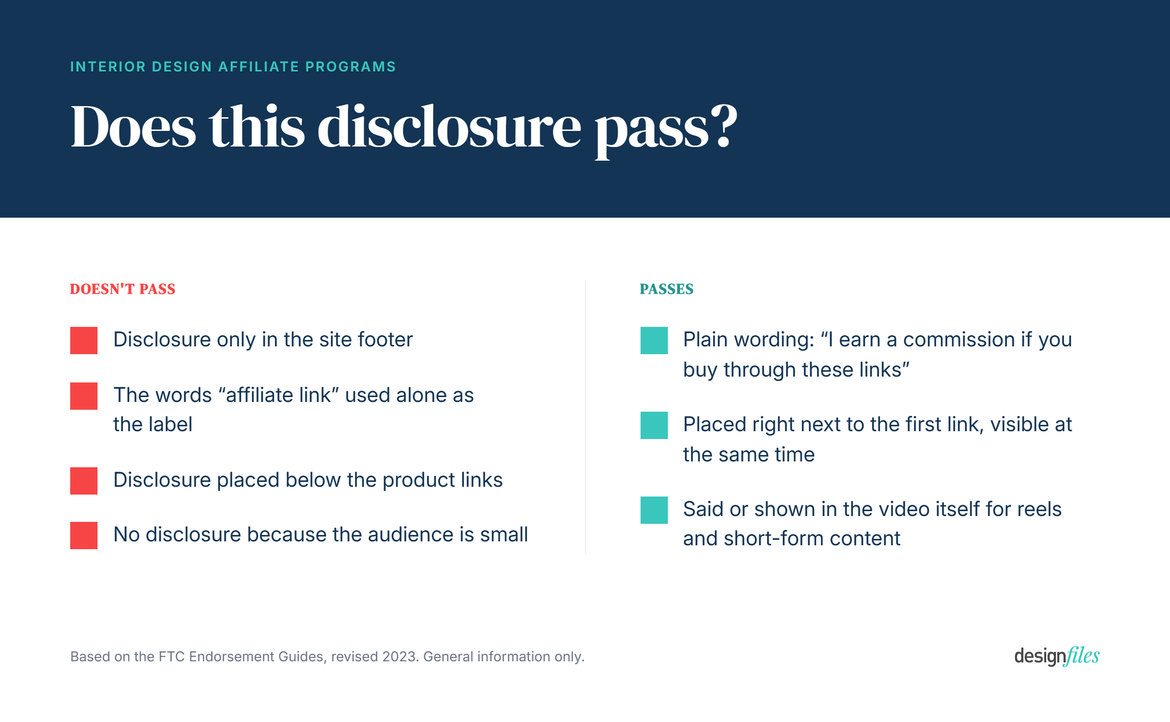
If there’s a material connection between you and a product you recommend, the FTC expects you to disclose it. Clearly, conspicuously, and close to the link.
A disclosure in your site footer doesn’t count. Neither does one buried in your link-in-bio. Your reader should see it at about the same moment she sees the recommendation.
The FTC’s Endorsement Guides guidance says labelling a link an “affiliate link” is inadequate on its own. Consumers may not understand that it means the person posting the link gets paid.
So say it plainly: “I earn a commission if you buy through these links.”
The 2023 revision also covers social video and short-form content. If you post reels of finished rooms with tagged products, a caption-only disclosure is a weak position.
LTK and Amazon each have their own disclosure rules as well. Amazon’s especially strict about where its links can appear at all.
This is general information. For the legal detail, the FTC publishes its own plain-language guidance, and it’s worth twenty minutes of your time.
Stack affiliate income under your other revenue
Affiliate commission is the smallest, most passive layer. Markup and trade sit above it and move more money. Productized services, digital products, and licensing sit above that, and that’s where the real leverage is.
Our guide to passive income for interior designers covers the wider picture. The five below are the layers worth building toward.
Product licensing and collaborations
If you’ve built a recognizable personal brand or design aesthetic, partnering with a manufacturer to create your own product line can lead to significant earnings.
- Example: A rug collection with a textile brand or a lighting line with a boutique manufacturer.
- Why it works: You earn a percentage of every sale, often with far better margins than affiliate programs.
Selling digital products
Create ebooks, templates, design guides, or online courses and sell them on your website to build scalable revenue.
- Example: A “Design Your Living Room in 5 Steps” guide for DIYers.
- Why it works: Digital products don’t cost much to produce, they’re infinitely scalable, and they’re not tied to a third-party platform.
Platforms like DesignFiles simplify the creation and sale of digital assets. With its moodboard editor, product library, and built-in sharing tools, you can easily package and distribute style guides, room templates, or shoppable boards, turning your design skills into a steady income stream.
Private labeling and e-commerce
Some designers launch their own branded online shops, offering curated, drop-shipped, or white-labeled decor and furniture.
- Example: A Shopify store selling designer-curated home goods.
- Why it works: You control the margins and customer experience while reinforcing your brand.
Wholesaling and product markups
Many designers receive wholesale pricing from vendors. Instead of passing the full discount to clients, you can mark up products to build in a margin. Learn more in our Interior Design Wholesale guide.
- Example: You purchase a $100 chair for $70 (30% off) and charge your client $90. Why it works: Markup structures are common in the interior design industry and can increase project profitability.
Paid memberships and consulting
If you have deep industry expertise, offer consulting calls or access to a private membership.
- Example: Monthly Q&As, access to exclusive content, or portfolio reviews.
- Why it works: Builds a loyal community and establishes you as a thought leader.
Will affiliate income replace your design fees? No. It won’t fix a pricing problem either.
What it’ll do is stop you earning nothing on products you already spent hours choosing. That holds if you’re already publishing somewhere and your clients already buy retail.
Start with one platform. Add two or three direct programs for the vendors you specify every time.
And put a disclosure line in your proposal template today, so you never have to retrofit one.
Ready to go deeper? Get The Interior Designer’s Guide to Maximizing Revenue with Affiliate Links, free.
Build your business on the best foundation with DesignFiles, the top-rated platform for small firms and solo designers.
Interior design affiliate programs FAQs
The best affiliate program for interior designers depends on your style, audience, and the types of products you recommend. The most popular options include Wayfair Professional, Etsy, and Amazon Associates. The ideal program offers strong commissions, quality products, and brands that align with your design aesthetic and client budgets.
Yes, though it’s more modest than the internet suggests. Surveyed designers reported monthly affiliate revenue across a $100 to $500 range, with one respondent reaching $1,000 through very active blogging (Dakota Design Company designer survey). The designers who do best already have an audience and publish consistently. Starting from zero traffic? Expect a long ramp.
High-paying home decor affiliate programs often include specialty retailers, luxury brands, or platforms with designer-focused models. Boutique decor retailers, trade-friendly platforms, and select lighting or furniture brands may offer commissions ranging from 10% to 30%, especially on higher-ticket items like sofas, rugs, or lighting.
Not always. While many affiliate programs accept bloggers and website owners, others allow creators to promote links through social media platforms like Instagram, LTK, Pinterest, or YouTube. However, having a website can make it easier to create evergreen content that generates consistent affiliate traffic.
Trade programs provide designers with discounted wholesale pricing so they can mark up products when selling to clients. Affiliate programs, on the other hand, pay designers a commission when someone purchases through their unique referral link. Many designers use both models to diversify their income streams.