

Let’s be honest: your interior design portfolio is doing a lot more talking than you probably realize, and not always saying the right things.
Done right, it’s the thing that convinces a stranger on the internet to trust you with their entire home. I’ve watched talented designers lose dream clients simply because their portfolio didn’t make the case fast enough, while designers with far less experience booked out because theirs did.
The good news is that you don’t need a rebrand or a reshoot to fix this. You need a strategy. Below, we’re breaking down exactly what belongs in an interior design portfolio, with real interior design portfolio examples so you can see the difference between “nice” and “booked solid.”
Table of Contents
What clients are really looking for in your portfolio
Clients aren’t scrolling your portfolio to admire your taste. They’re scrolling to answer one question:
Can this person deliver the transformation I’m dreaming of?
A professional interior design portfolio earns trust fast, and it’s not because it’s pretty. Here’s what it actually needs:
- Real project details, not vague mood. Specifics build trust. Vibes alone don’t.
- A consistent point of view. Clients should be able to tell it’s you across every project, not guess.
- Enough context to explain the “why.” A stranger should understand what you did and why it worked, not just what it looked like when you finished.
Charm and color palettes matter, sure, but they’re not what closes the deal. Clarity does. Before we get into the tips themselves, keep this in the back of your mind for every single project you choose to feature: would this make someone confident enough to hand you their house keys?
How to make an interior design portfolio: 7 tips with real examples
Your portfolio is a sales tool, and most designers treat it like an afterthought.
I’ve seen designers with genuinely excellent work lose clients simply because their portfolio didn’t make the case for hiring them fast enough. Fixing this rarely means starting over. It means being deliberate about what you lead with, how you frame each project, and who you’re actually trying to attract.
Below are seven interior design portfolio tips pulled from designers who are already doing this well, with real portfolio examples for each one so you can see exactly what it looks like in practice, not just hear it described.
1. Lead with your strongest, most specific project (not your newest)
Most designers default to showing their newest work first, but recency isn’t the same as relevance.
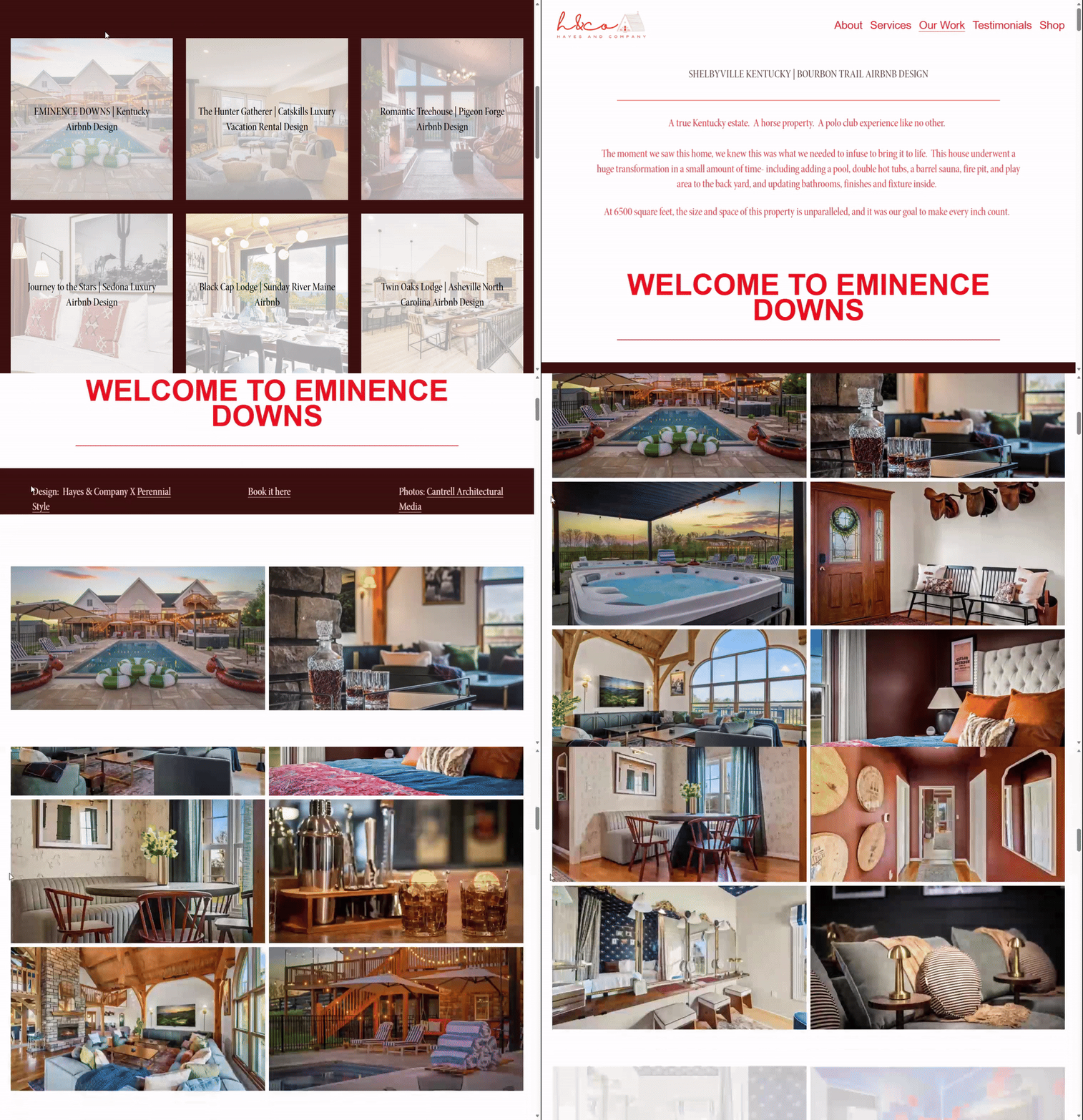
Designer Paige Hayes of Hayes & Co. Interiors leads her portfolio with her largest project to date, a sprawling luxury Airbnb build complete with custom lodge-style interiors and statement lighting, rather than tucking it further down the page next to smaller vacation rentals.
That placement isn’t an accident. It signals to prospective clients exactly the scale and style of project she wants more of: large, high-budget short-term rentals across the country, not one-off guest rooms.
If you want bigger clients, your first portfolio sample needs to prove you can already handle that scope. Put your most ambitious project first, regardless of when you actually finished it.
2. Share details and unique angles that transport the viewer
A portfolio full of wide, flat room shots tells a viewer what a space looks like, but it doesn’t make them feel like they’re standing in it.
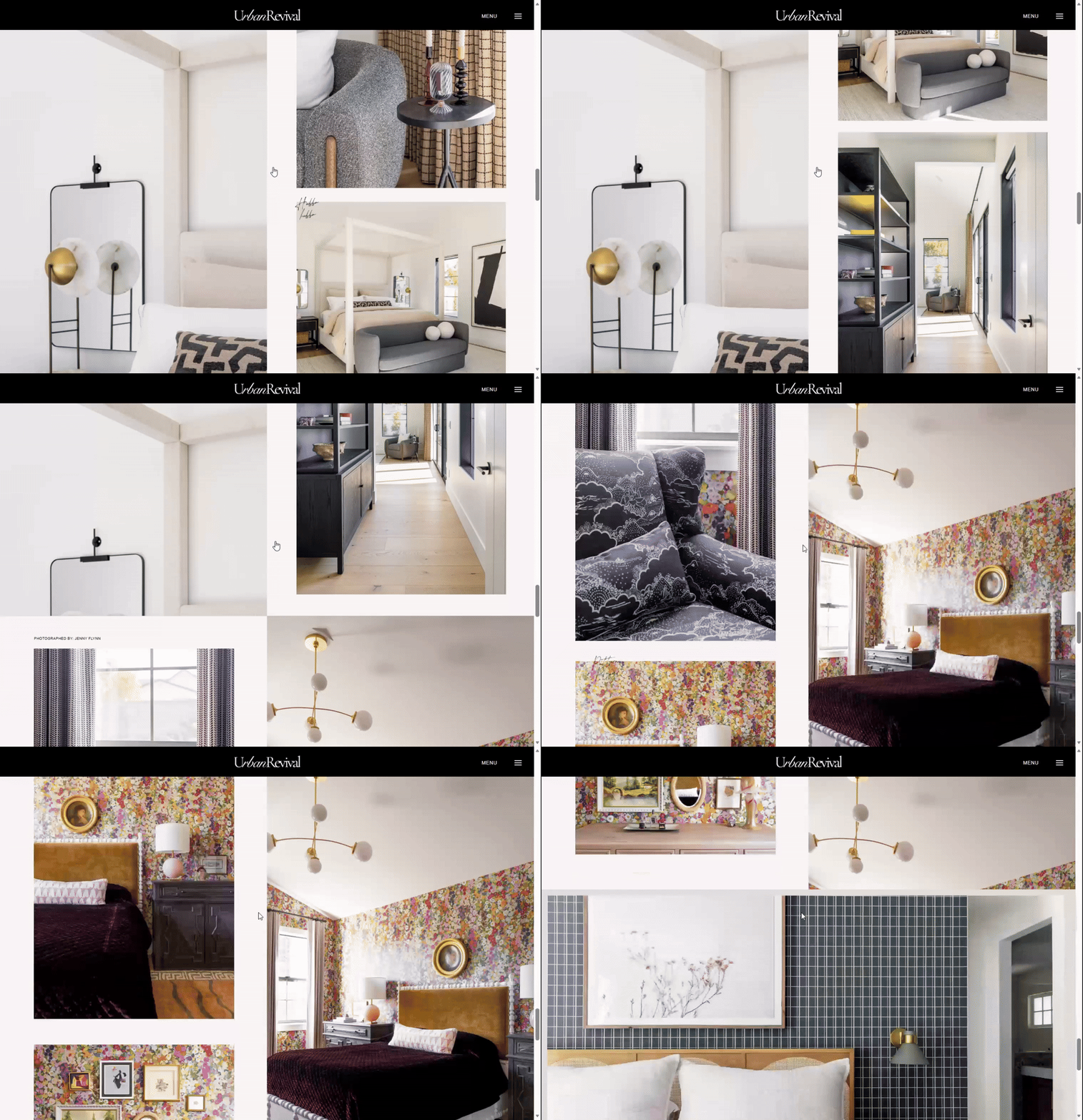
Urban Revival’s bedroom portfolio does this well by mixing in the smaller, unexpected angles: a lit candle on a nightstand, the curved corner of an accent chair catching the light, a view looking down a hallway toward the room instead of straight into it, a dresser shot from an angle that makes you want to open the drawers.
These details do more work than another full-room photo ever could, because they let a prospective client imagine actually living there. When you’re selecting images for your own portfolio, don’t just document the room. Capture the moments in it.
3. Tailor the portfolio to the client you want next
Your portfolio should look like a highlight reel for the client you want to attract next, not a complete archive of everything you’ve ever touched.
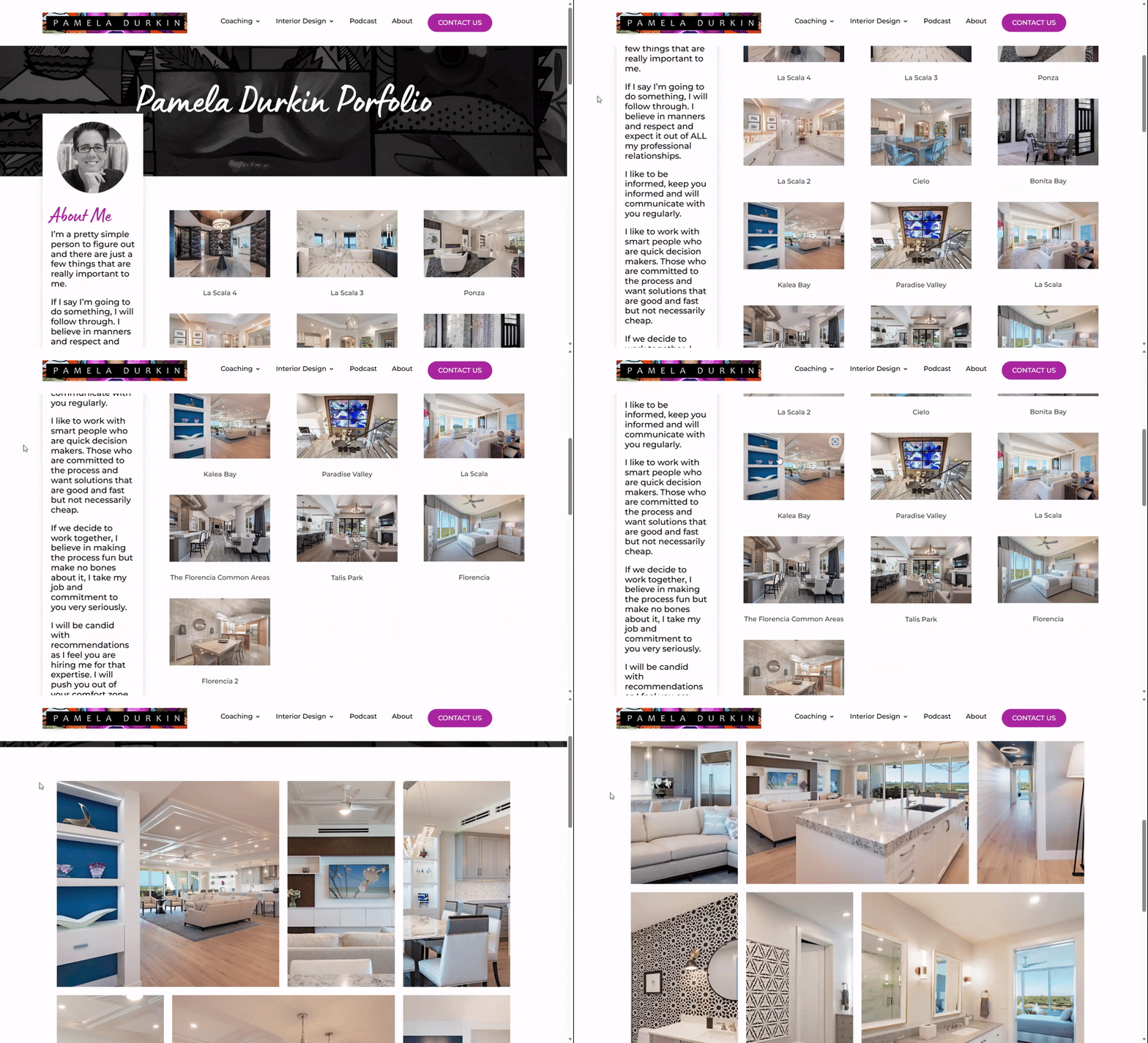
Pamela Durkin’s portfolio is a clear example of this: it’s weighted heavily toward waterfront luxury properties, with clean, modern lines carried consistently across nearly every project shown.
That focus offers a clear point of view. A prospective client browsing her work immediately understands the exact kind of home and style she specializes in, which means the inquiries she gets are already pre-qualified.
If you’re trying to move upmarket or into a specific niche, your portfolio needs to reflect where you’re going, not just where you’ve already been.
4. Write short project narratives, not just captions
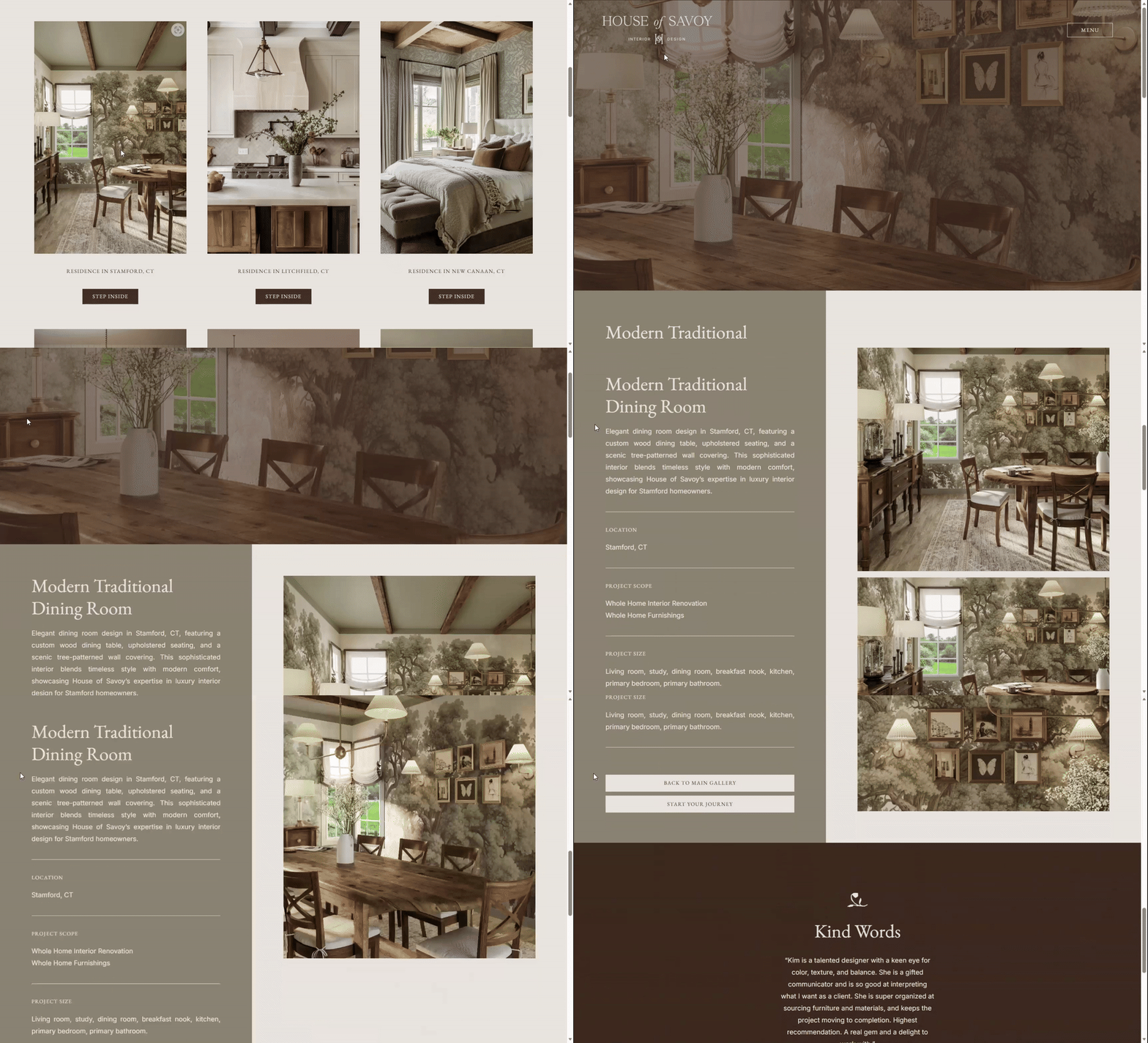
A one-line caption tells a visitor what room they’re looking at. A short narrative tells them why it matters. House of Savoy’s Stamford dining room project pairs its photos with a few sentences on the scope, from the custom wood table to the tree-patterned wall covering, framing the whole thing as a blend of timeless style and modern comfort rather than just a room reveal.
That extra context does double duty. It helps AI tools and search engines actually understand what the project involved, since there’s real text to index rather than just an image, and it helps human visitors grasp the transformation and the expertise behind it. A photo shows the result. A few sentences show the thinking, which is what clients are actually paying for.
5. Keep format and branding consistent across every project
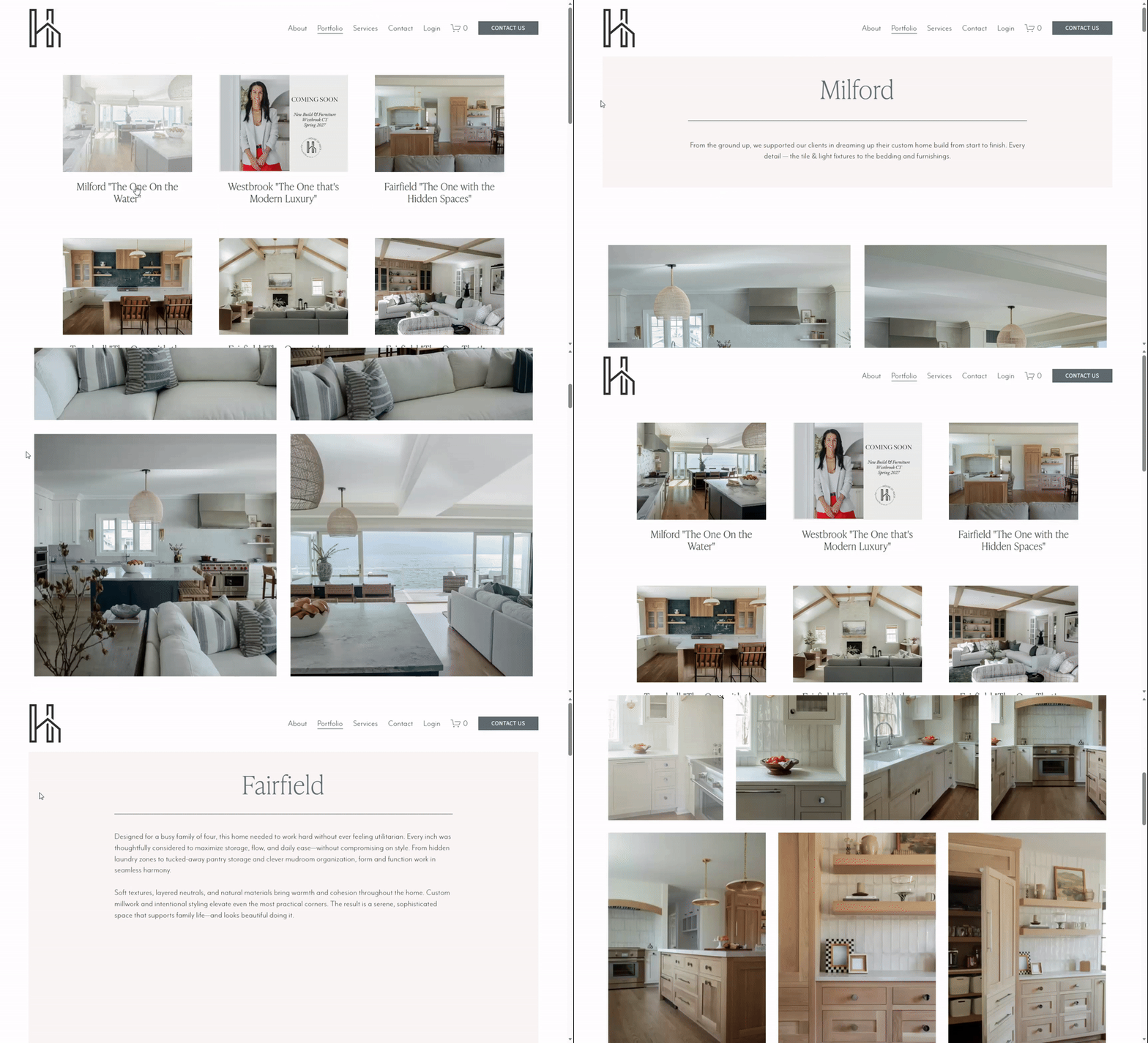
When every project page follows the same structure, visitors spend their attention on your work instead of figuring out how to read the page.
House of Huck’s Fairfield project is a good template to borrow from: a gray background section up top holds the project title and a short description, then the photo collection sits on a clean white background below.
That same layout repeats across every project in their portfolio, so browsing from one to the next feels seamless rather than jarring. You don’t need an elaborate design to look professional, you need a repeatable one.
Pick a simple portfolio layout, apply it to every project without exception, and let the consistency itself become part of your brand.
6. Showcase your range
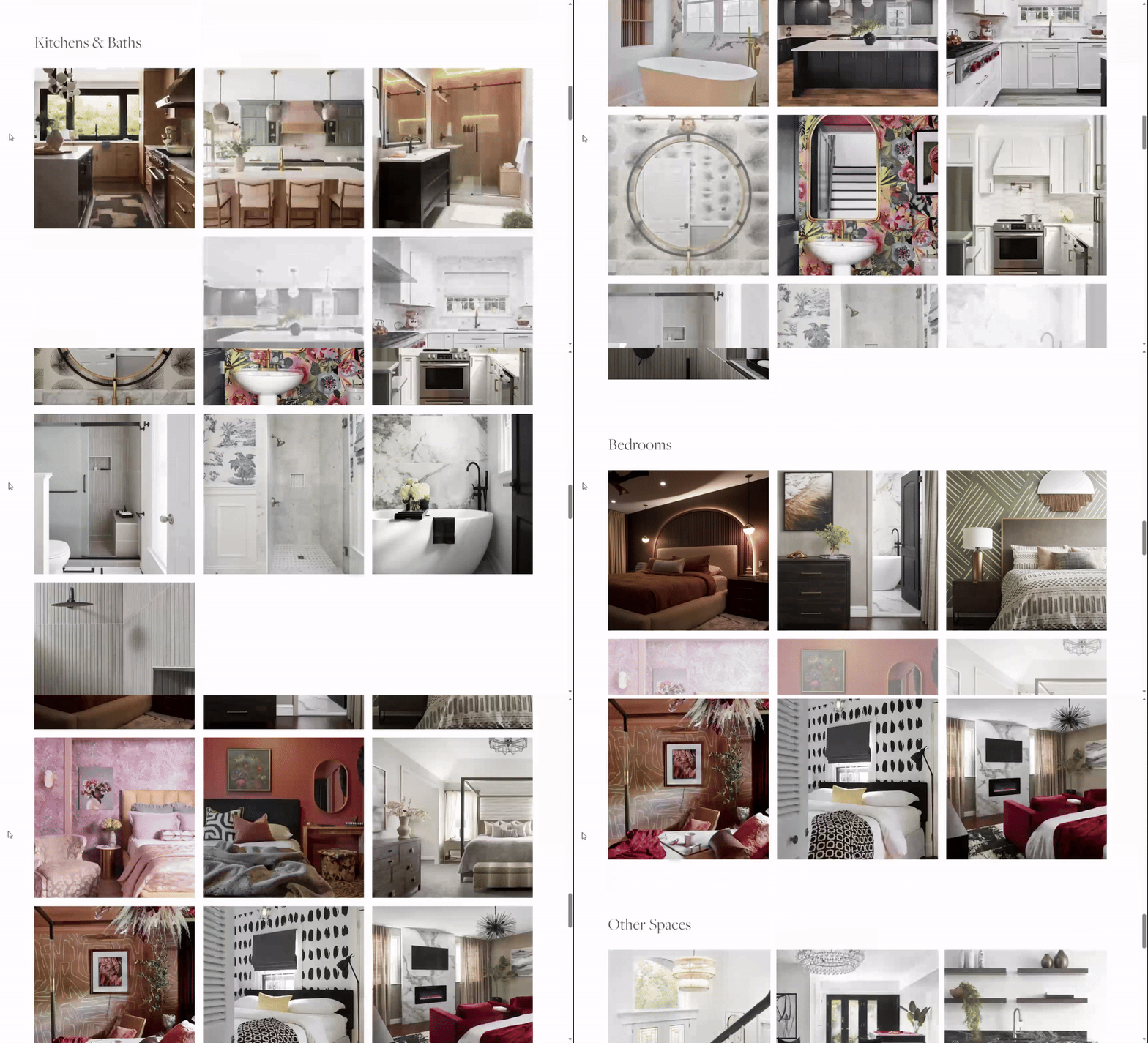
Organizing a portfolio purely by completed project can accidentally make a designer look one-note, especially if several projects lean toward a similar aesthetic.
Gray Space Interiors takes a different approach by organizing its portfolio by room type instead. Grouping several living rooms together, or several kitchens, makes it immediately obvious that the designer isn’t repeating one formula. Within the same room type, you’ll see different color palettes, different textures, and different overall styles, which signals real range rather than a single signature look applied to every home.
That matters because clients aren’t just deciding if they like your taste, they’re deciding if you can execute their taste. Make that decision easy by showing you can move between styles convincingly, not just within one aesthetic lane.
7. Include before and after details
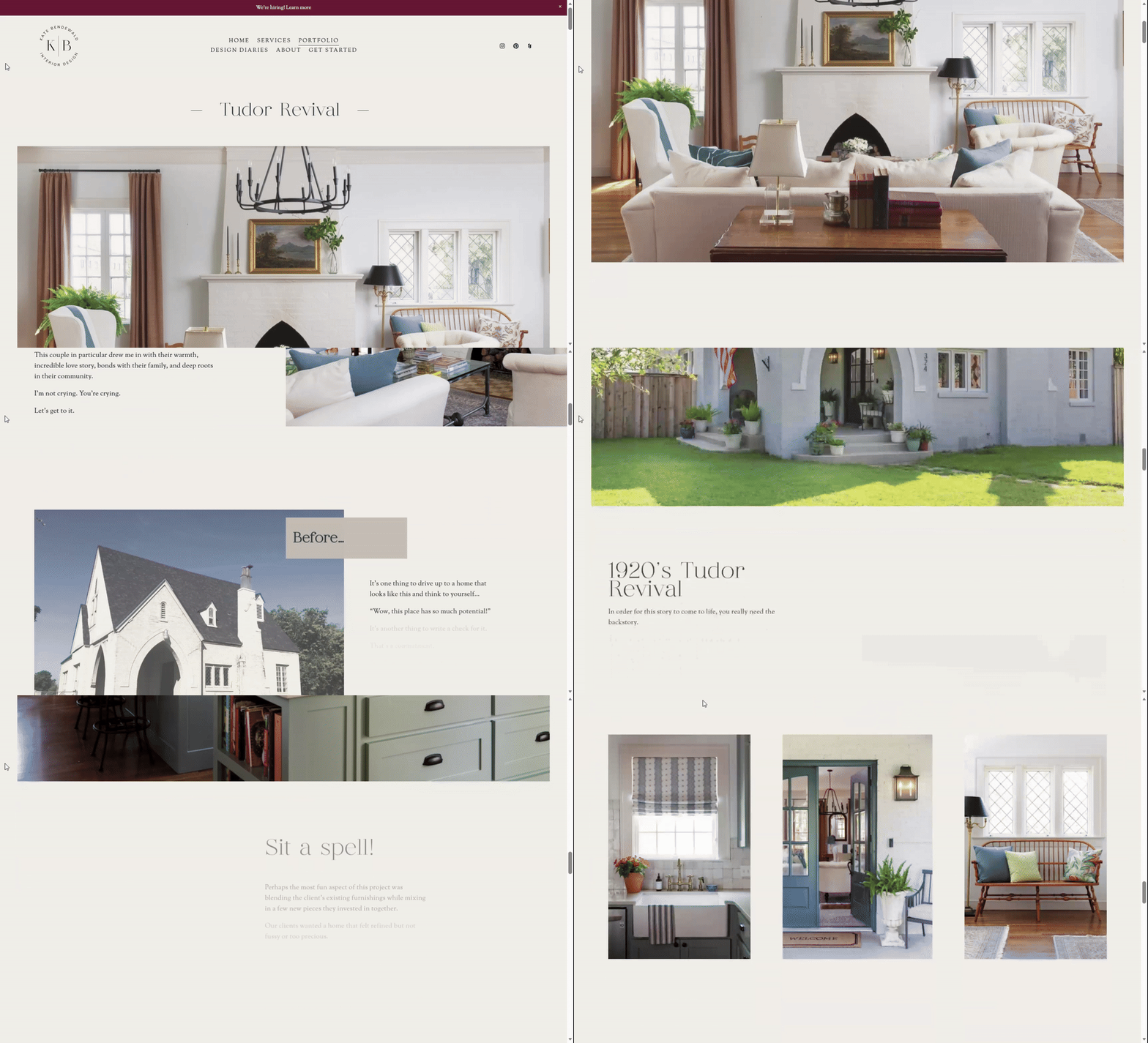
A before-and-after photo proves you can transform a space. The story behind it proves you understood the people living in it.
Kate Bendewald’s Tudor Revival project does both at once: the before shots of a dilapidated 1925 home sit alongside a genuinely personal narrative about the blended family who bought it, right down to why they wanted the space to feel collected and lived-in rather than overly polished. That context reframes every after photo that follows, from the refinished original floors to the intentionally mismatched mix of matte black, silver, and antique brass fixtures.
None of it reads as a random design choice once you know the story driving it. When you’re documenting your own before-and-afters, resist the urge to just caption them “before” and “after.” Explain who the space was for and what problem you were actually solving, and the transformation will land harder.
How to build a portfolio with no clients yet
Here’s the chicken-and-egg problem nobody warns you about: you need a portfolio to land clients, but you need clients to build a portfolio. The good news is that “client work” and “real work” aren’t actually the same thing, and you have more options than you think for how to make an interior design portfolio before you’ve been paid a single dollar.
Give yourself a spec project
Pick a room, in your own home if you have one, and design it exactly as you would for a paying client. Write a brief, set a real budget, source real products, and document the whole process the way you would for a case study. Spec projects get an unfair reputation as “not real,” but a genuinely well-executed one shows exactly the same skills a client is hiring for: taste, problem-solving, and follow-through.
Design for someone you already know
A friend’s guest bedroom or a family member’s home office is a legitimate project, especially if you treat it like one. Send a proposal. Hold a real design conversation about their needs. Photograph it properly when it’s done. The relationship might be free, but the process and the final result don’t have to look like a favor. This is strategy is particular helpful to kickstart a new pricing package.
Assist or subcontract for an established designer
Working under another designer, even temporarily, gets you real projects to point to and real experience to describe, even if the portfolio credit belongs to someone else for now. Be upfront about your role (you’re showcasing your contribution, not claiming the whole project), but don’t undersell it either.
Invent a client brief
If you genuinely can’t access any of the above, create a fictional client with a specific need, a budget, a style, a life stage, and design against it like it’s real. This works especially well for showing range across a few different projects at once, since you control exactly what gets showcased.
None of these are consolation prizes. Clients care about what you can do, not the invoice history behind it. A handful of thoughtful, well-documented projects built this way will beat a portfolio padded with mediocre “real” work every time.
How to pivot your portfolio when you’re going upmarket or changing niche
Repositioning your business doesn’t mean burning your portfolio down and starting over. It means being ruthless about what stays.
Cut the strong work that sends the wrong signal
This is the hardest step, and also the one people skip. A gorgeous project that doesn’t match where you’re headed isn’t doing you any favors; it’s actively confusing prospective clients about what you do. If you’re moving from cozy family homes into high-end coastal builds, that beautifully styled craftsman bungalow needs to go, even if it’s some of your best work to date.
Prove the new direction with one or two spec projects
You don’t need ten waterfront estates to signal you’re the waterfront-estate designer. One or two deliberately chosen spec or passion projects, designed specifically in the style and scope of your new niche, can do the convincing for you while real client work in that direction catches up.
Rewrite the story, not just the photos
Go back through the projects you’re keeping and reframe the narratives to speak to your new ideal client. The same primary suite renovation can read as “cozy family retreat” or “quiet luxury sanctuary” depending on the language around it. You’re not lying about the work, you’re highlighting the parts of it that matter to the client you want next.
Think of this as a phased transition, not a rebuild. Your portfolio should always be evolving toward the business you’re building, not just archiving the business you already have.
FAQ
Quality beats quantity every time. Somewhere between 6 and 12 well-documented projects is plenty, as long as each one earns its spot. A portfolio with three stunning, detailed projects will always outperform one with twenty rushed, half-captioned ones.
Not on day one. Good natural light, a tidy space, and a steady hand can carry you further than you’d think when you’re just starting out. That said, once you have paying clients, professional photography quickly becomes worth the investment since it’s often the first thing a prospective client actually judges you on.
Absolutely. Interior design portfolio templates exist for a reason, and using one is not a shortcut you need to feel guilty about. A clean, repeatable template frees you up to focus on the work itself instead of reinventing your layout for every single project.
Small doesn’t mean small potential. A single well-styled powder room or a thoughtfully reworked reading nook can function as a genuinely compelling interior design portfolio example, as long as you document the thinking behind it and not just the finished photo.
Ready to build the portfolio that gets you booked?
A great portfolio is built one intentional project at a time. That’s exactly where DesignFiles comes in. Use our moodboard and client presentation tools to design and document new projects with the kind of polish clients notice immediately, and don’t forget: your testimonials and case studies deserve their own spotlight too.
DesignFiles is the best all-in-one platform for solo designers and small firms. Explore our features.


![How Much to Charge for Interior Design [With Free Calculator]](https://blog.designfiles.co/wp-content/uploads/2024/08/charge-for-interior-desig-services-image-16x9-1-768x432.jpg)